Market intelligenceUpdated June 14, 2026

Vietnam black pepper buyer guide

A practical 2026 view of supply, grades, price formation, origin integrity and food-safety controls for importers buying whole Vietnamese peppercorns.

Market reference prices and supply data, June 2026
Reference Value
Vietnam 500 g/L $6,100/ MT
Vietnam 550 g/L $6,200/ MT
2025/26 production estimate ~153k MT
Vietnam to Europe in 2024 58k MT

Supply signal

Production is well below the 2018/19 peak as acreage moved into crops such as coffee and durian.

Buyer implication

Price volatility and mixed-origin processing make crop identity and quote validity commercially important.

Quality implication

A density grade is only the beginning; the contract must control safety, defects, chemistry and sensory performance.

01 · Market position

Large exporter. Tighter domestic crop.

These statements can both be true because Vietnam has substantial cleaning, processing and trading capacity.

CBI's February 2026 market study, drawing on IPC and UN Comtrade, describes Vietnam as supplying roughly 35–45% of annual world pepper production. Its May 2026 market-entry study estimates Vietnamese production at about 153,000 MT for 2025/26, down from a 322,000 MT peak in 2018/19.

Vietnam's export capacity is larger than its crop alone suggests. Processors also import pepper from origins including Brazil, Cambodia and Indonesia for cleaning, processing, blending or re-export. In 2024, Vietnam shipped about 58,000 MT to Europe; approximately 74% was whole pepper.

Buyer conclusion

"Exported from Vietnam" and "grown in Vietnam" are not automatically the same commercial claim. State the origin rule and evidence you require.
02 · Grade decoder

500, 550 and 580 g/L: what the number does and does not tell you.

Bulk density helps describe berry fill and lot composition. It is not a substitute for a complete quality specification.

Density Position Typical fit Buyer check
500 g/L Commercial Extraction, grinding, broad food-processing programs Light berries, pinheads, moisture, foreign matter and piperine still need separate limits.
550 g/L Mainstream export Wholesale, spice blending, food manufacturing and repacking A common benchmark, but not a complete food-safety or sensory specification.
570–580 g/L Dense selection Premium whole peppercorn programs, grinders and visual retail applications Confirm screen distribution and approved sample; density does not guarantee uniform size or aroma.

Density

Specify the test method, tolerance and whether the result applies before or after cleaning.

Screen

Use a size distribution, not only "4 mm" or "5 mm," when uniform appearance matters.

Sensory

Approve aroma, pungency, color and off-note acceptance against an identified sample.

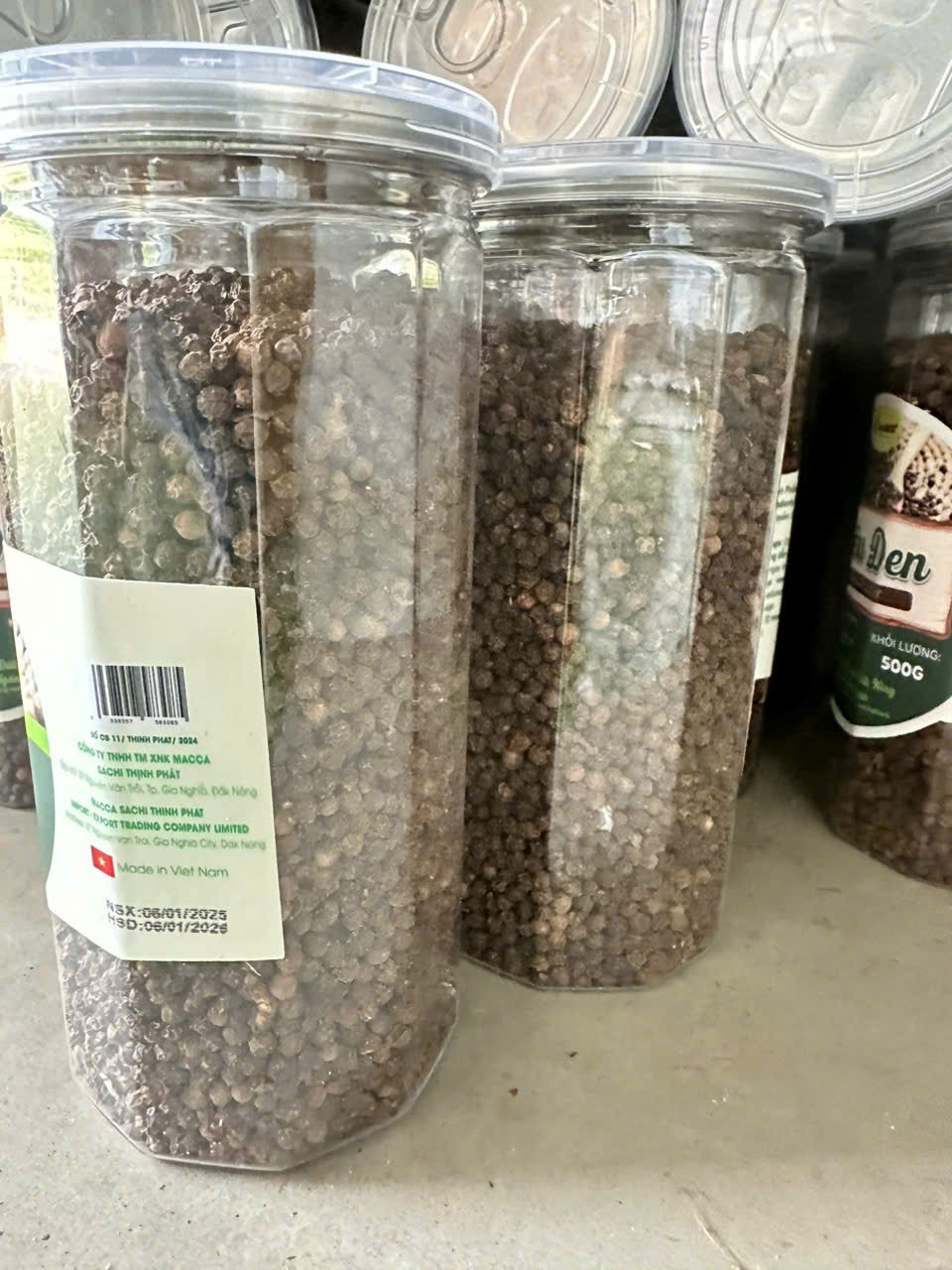
Vietnamese whole black peppercorns in clear retail containers

Whole pepper advantage

Importers can inspect identity, defects and cleanliness more readily before milling.

03 · Price anatomy

Compare the same pepper, at the same point in the chain.

The IPC weekly figure is an indicative origin benchmark. A supplier quote can legitimately differ because the commercial object is different.

01

Base pepper value

Origin, crop position, density, availability and supplier purchase timing

02

Preparation

Machine cleaning, polishing, double polishing, size sorting and metal detection

03

Safety controls

Steam treatment or other validated kill step, residue panel and microbiological testing

04

Packaging

Bag type, food-grade liner, net weight, palletisation, labels and container protection

05

Trade terms

FOB versus CFR/CIF, freight validity, insurance, finance cost and payment terms

06

Usable yield

Loss from cleaning, grinding, screening, sterilisation and buyer-side rejection

04 · Risk register

Six expensive assumptions to remove before contract.

Most claims begin with an undefined word, a mismatched test or evidence that cannot be connected to the loaded lot.

01

Origin is assumed, not demonstrated

Warning signal

The offer says "Vietnam pepper" but the supplier cannot connect farm or aggregation lots to the export lot.

Control

Contract origin rules, lot genealogy and change notification. Ask whether imported pepper can enter the processing stream.

02

Density becomes a proxy for quality

Warning signal

500 or 550 g/L is the only specification discussed.

Control

Add moisture, light berries, pinheads, foreign matter, mould, insects, piperine, volatile oil and sensory acceptance.

03

A certificate replaces a kill-step review

Warning signal

A negative Salmonella result is presented without treatment validation, sampling basis or lot identity.

Control

Define who controls the hazard, treatment parameters, post-treatment segregation and lot-specific verification.

04

Residue testing uses the wrong target list

Warning signal

The laboratory panel is generic or copied from another destination.

Control

Build the panel from the destination's current MRLs, farm inputs, historical findings and buyer risk assessment.

05

Moisture is acceptable at loading, not arrival

Warning signal

No liner, container-dryness or condensation plan is documented.

Control

Specify moisture limit, packaging barrier, container inspection, desiccant policy and claims sampling.

06

Price validity outlives the physical market

Warning signal

A quote is compared after its validity window or without matching crop, grade and treatment.

Control

Time-stamp every comparison and align grade, process, Incoterm, shipment window, payment and quantity.

Food-safety decision

Who controls Salmonella?

Black pepper is a low-moisture ingredient, not a no-risk ingredient. A buyer must know whether the hazard is controlled at origin, by an importer, or later by the receiving manufacturer.

A negative COA is verification evidence, not a substitute for a validated preventive control.

1. Hazard owner

Name the party responsible for the kill step and the evidence the next party receives.

2. Process validation

Review product load, time, temperature or pressure, target organism and worst-case conditions.

3. Post-process protection

Control segregation, equipment hygiene, packaging and recontamination after treatment.

4. Lot verification

Agree sampling, method, laboratory accreditation, lot identity and disposition of nonconforming product.

05 · Market access

The destination changes the test plan.

European Union

EU

Buyers commonly work from EU legal limits plus ESA, Codex, ASTA, ISO or IPC quality references. CBI's May 2026 review highlights Salmonella, pesticide residues, aflatoxins, ochratoxin A, PAHs and lead as relevant control areas.

  • Check current MRLs for the exact commodity and active substance.
  • Use accredited laboratories and methods agreed with the buyer.
  • Confirm private certification and sustainability requirements separately from law.

United States

US

US import and manufacturing programs should be built around the applicable FDA requirements, including facility registration, preventive controls and foreign-supplier verification responsibilities where they apply.

  • Document known or reasonably foreseeable biological, chemical and physical hazards.
  • Approve suppliers based on the food, hazard control and supplier performance.
  • Align origin treatment, importer FSVP and receiving-facility controls without gaps.

This guide is operational sourcing information, not legal advice. Importers should verify current rules, product classification and competent-authority instructions for each destination and shipment.

06 · Buyer workflow

From market signal to accepted lot.

01

Define use

Whole retail, grinder, milling, extraction or industrial seasoning determines the critical attributes.

02

Issue one RFQ

Give every supplier the same grade, analytical, safety, packaging, origin and commercial requirements.

03

Qualify the system

Review facility certification, process flow, hazard controls, laboratories and traceability before price selection.

04

Approve a sample

Record density, screen, color, aroma, pungency, defects and the sample's exact lot or crop identity.

05

Lock the contract

Attach the signed specification, sampling plan, test methods, tolerances and claims procedure.

06

Verify the lot

Use lot-specific COA data, independent testing or pre-shipment inspection according to risk.

07

Protect shipment

Check liner, bag marks, container condition, moisture protection, seal and document consistency.

08

Review arrival

Sample under the agreed method and feed results back into supplier and crop-risk scoring.

07 · RFQ file

Ten headings every comparable offer needs.

Do not let suppliers choose what information appears in the comparison. Issue one structured request.

01

Commercial identity

Whole black pepper, Piper nigrum, crop or shipment window, declared origin and HS 090411.

02

Grade

Target bulk density and tolerance, screen distribution, preparation method and visual reference.

03

Composition

Moisture, piperine, volatile oil, total ash, acid-insoluble ash and any buyer-specific chemistry.

04

Defects

Foreign matter, light berries, pinheads, mouldy or insect-damaged berries and extraneous matter.

05

Microbiology

Salmonella plan, aerobic count, yeast and mould, Enterobacteriaceae or other agreed limits and methods.

06

Contaminants

Destination-specific pesticide panel, aflatoxins, ochratoxin A, PAHs and heavy metals where applicable.

07

Treatment

Validated process, treatment location, critical parameters, post-treatment controls and declaration wording.

08

Packaging

Bag material, liner, net weight, label, pallet plan, container loading and condensation controls.

09

Traceability

Farm or collection scope, processor lot, treatment lot, packing lot, retained sample and recall linkage.

10

Terms

Quantity, Incoterm, named port, shipment window, price validity, payment, inspection and claims process.

Buyer questions

Frequently asked questions

What is the difference between Vietnam black pepper 500 g/L and 550 g/L?+

The number is bulk density: the mass of pepper that occupies one litre under the agreed test method. A 550 g/L lot is denser than a 500 g/L lot and will generally contain fewer light or undeveloped berries, but density alone does not define cleanliness, safety, piperine, volatile oil, size or sensory quality.

Is the IPC price the price an importer will pay?+

No. IPC publishes an indicative export-market reference for a named origin and grade. A transaction price also depends on preparation, treatment, testing, packaging, quantity, shipment window, freight, payment terms and supplier position. The reference should be dated and used as context, not as a firm offer.

When is Vietnam's main black pepper harvest?+

The main harvest is generally concentrated from January through April, although timing varies by province, weather and farm. Buyers often see more new-crop offers during and after this period, but available inventory can also include carryover or pepper imported for processing and re-export.

Should buyers purchase steam-sterilised pepper?+

That depends on the application and who will control the microbiological hazard. Ready-to-eat uses often need a validated kill step somewhere in the supply chain. Buyers should review process validation, lot segregation, post-treatment handling, sensory impact and verification testing rather than relying on the words "steam sterilised" alone.

How can a buyer verify Vietnamese origin?+

Use contractual origin definitions, supplier declarations, lot-level traceability, farm or collection records and change notification. If origin is commercially important, include an audit or documentary verification plan and state whether imported pepper may be processed, blended or re-exported through Vietnam.

Vietnam supply

Quote the specification, not just "550 FAQ."

Send GreenTech your application, destination, treatment responsibility, grade and test plan for a comparable black pepper offer.