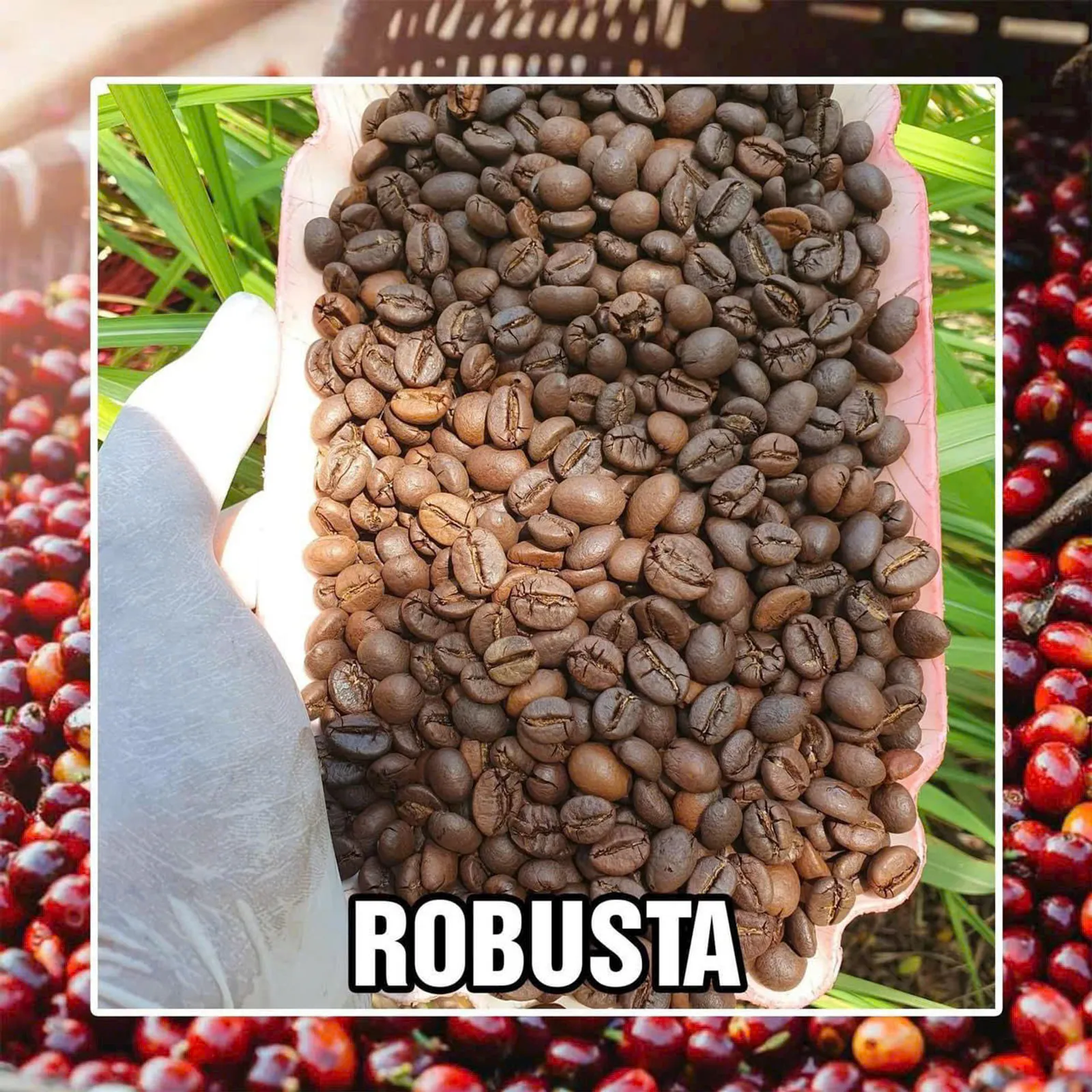
Global robusta coffee origins comparison
6 Origins ComparedBuyer Use CasesFlavor AnalysisSourcing Guide

Global Robusta Coffee Origins: A Buyer's Comparison

Vietnam, Brazil, Uganda, Indonesia, Ivory Coast, and India account for over 70% of global robusta supply. This guide compares each origin on flavor, production scale, processing methods, and buyer use cases.

>70%

of global robusta supply

6

origins compared

6

comparison metrics

4

buyer use cases

Side-by-Side Comparison

Robusta Origins at a Glance

Key attributes across the six major robusta-producing countries. Scroll horizontally on mobile.

Origin Annual Production Global Share Altitude Processing Caffeine Body Best For Price Tier
🇻🇳
Vietnam Recommended
~1.6M MT/yr ~40% 400–1,500 m Natural, Washed ~2.7% ▮▮▮▮▮ Espresso blends, instant, RTD Low–Medium
🇧🇷
Brazil (Conilon)
~500K MT/yr ~12% 200–700 m Natural, Pulped Natural ~2.5% ▮▮▮▮▯ Espresso blends, soluble coffee Medium
🇺🇬
Uganda
~300K MT/yr ~7% 900–1,500 m Natural, Washed ~2.8% ▮▮▮▮▯ Instant coffee, commercial blends Low
🇮🇩
Indonesia
~250K MT/yr ~6% 400–1,000 m Wet-hulled (Giling Basah) ~2.4% ▮▮▮▮▮ Italian dark espresso, heavy blends Low–Medium
🇨🇮
Ivory Coast
~150K MT/yr ~4% 100–400 m Natural ~2.3% ▮▮▮▯▯ Bulk instant, soluble coffee Very Low
🇮🇳
India
~100K MT/yr ~3% 600–1,000 m Cherry, Parchment (washed) ~2.3% ▮▮▮▮▯ Espresso blends, filter coffee Medium
Origin Profiles

Country-by-Country Breakdown

Each origin has distinct terroir, processing norms, and buyer applications.

🇻🇳

Vietnam

Recommended Origin

World #1 Producer
Production
~1.6M MT/yr
Global Share
~40%
Key Region
Central Highlands (Dak Lak, Lam Dong)
Altitude
400–1,500 m
Processing
Natural, Washed
Grade System
TCVN 4193:2014

Vietnam dominates global robusta at over 40% of supply. Central Highlands volcanic soils produce dense beans with very high caffeine (~2.7%), thick crema, and earthy-chocolate profile. TCVN 4193 grading is transparent and internationally recognized. Reliable year-round supply via Cat Lai port.

Buyer Advantage

Highest volume, consistent G1 S18/S16 grading, competitive FOB pricing, strong logistics infrastructure


🇧🇷

Brazil (Conilon)

Smooth & Scalable
Production
~500K MT/yr
Global Share
~12%
Key Region
Espirito Santo, Rondonia
Altitude
200–700 m
Processing
Natural, Pulped Natural
Grade System
ABIC / COB standards

Brazil's Coffea canephora — called Conilon — is grown primarily in Espirito Santo and Rondonia at low altitudes. Natural and pulped natural processing creates a smoother, less bitter robusta with nutty, caramel notes. Brazil's strong agricultural infrastructure means consistent quality and competitive pricing.

Buyer Advantage

Smoother bitterness, excellent for blending with arabica, strong quality consistency

🇺🇬

Uganda

High Caffeine
Production
~300K MT/yr
Global Share
~7%
Key Region
Lake Victoria basin, West Nile
Altitude
900–1,500 m
Processing
Natural, Washed
Grade System
UCDA certification

Uganda grows wild-origin Coffea canephora ugandensis in the Lake Victoria basin and western highlands. East African terroir produces a distinctly earthy, sometimes fruity robusta with very high caffeine. UCDA certification provides traceability. Used heavily in European instant coffee manufacturing.

Buyer Advantage

Highest caffeine of all origins (~2.8%), unique wild-origin character, UCDA traceability

🇮🇩

Indonesia

Smoky & Heavy
Production
~250K MT/yr
Global Share
~6%
Key Region
Sumatra, Flores, East Java
Altitude
400–1,000 m
Processing
Wet-hulled (Giling Basah)
Grade System
SNI standards

Indonesian robusta — primarily from Sumatra, Flores, and East Java — is processed using the unique wet-hulling (Giling Basah) method. This creates an exceptionally heavy, low-acid cup with pronounced earthy, herbal, and smoky notes. Preferred by Italian-style dark roasters for thick crema.

Buyer Advantage

Unique wet-hulled processing, very heavy body, prized for Italian espresso dark roast blends

🇨🇮

Ivory Coast

Commodity Volume
Production
~150K MT/yr
Global Share
~4%
Key Region
Southwest (Man, Daloa)
Altitude
100–400 m
Processing
Natural
Grade System
CCC export standards

Ivory Coast is Africa's largest robusta producer. Production is primarily commodity-grade natural process, used in large-scale instant and soluble coffee manufacturing. Limited differentiation by region or grade. Pricing is typically the lowest of major origins.

Buyer Advantage

Very competitive pricing for bulk instant/soluble applications

🇮🇳

India

Spicy & Balanced
Production
~100K MT/yr
Global Share
~3%
Key Region
Coorg, Chikmagalur, Kerala
Altitude
600–1,000 m
Processing
Cherry, Parchment (washed)
Grade System
India Coffee Board

Indian robusta — primarily from Coorg, Chikmagalur, and Kerala — is grown under shade at moderate altitude. Robusta Cherry and Parchment grades offer a spicier, slightly more complex profile than other origins. India Coffee Board certification provides traceability. Growing export infrastructure.

Buyer Advantage

Shade-grown complexity, spicy notes, Coffee Board traceability, growing specialty appeal

Flavor Comparison

Flavor Profile by Origin

Relative intensity scores across key cup attributes. Scores are normalized for comparison — not absolute cup scores.

Attribute 🇻🇳 Vietnam 🇧🇷 Brazil 🇺🇬 Uganda 🇮🇩 Indonesia 🇨🇮 Ivory 🇮🇳 India
Body ▮▮▮▮▮ ▮▮▮▮▯ ▮▮▮▮▯ ▮▮▮▮▮ ▮▮▮▯▯ ▮▮▮▮▯
Bitterness ▮▮▮▮▯ ▮▮▮▯▯ ▮▮▮▮▯ ▮▮▮▮▯ ▮▮▮▯▯ ▮▮▮▯▯
Caffeine ▮▮▮▮▮ ▮▮▮▮▯ ▮▮▮▮▮ ▮▮▮▯▯ ▮▮▮▯▯ ▮▮▮▯▯
Earthiness ▮▮▮▮▯ ▮▮▯▯▯ ▮▮▮▮▮ ▮▮▮▮▮ ▮▮▮▯▯ ▮▮▮▯▯
Crema Yield ▮▮▮▮▮ ▮▮▮▯▯ ▮▮▮▯▯ ▮▮▮▮▯ ▮▮▯▯▯ ▮▮▮▯▯
Acidity ▮▯▯▯▯ ▮▮▯▯▯ ▮▮▯▯▯ ▮▯▯▯▯ ▮▮▯▯▯ ▮▮▮▯▯

Scale: ▮ = low intensity, ▮▮▮▮▮ = highest intensity. Relative comparison only.

Sourcing Guide

Which Origin for Which Application?

Match robusta origin to your product application for optimal results.

Espresso Blends (commercial)

Recommended

Vietnam G1 S18 or Brazil Conilon

Vietnam provides thick crema and high caffeine. Brazil smooths bitterness. A 20–40% Vietnam/Brazil blend in arabica-based espresso is the most common commercial formula.

Instant & Soluble Coffee

Recommended

Vietnam G2 FAQ or Ivory Coast

High solubility, high extraction yield, competitive cost. Vietnam G2 FAQ is the dominant choice for Southeast Asian and European instant manufacturers.

Italian-Style Dark Espresso

Recommended

Indonesia or Vietnam Dark Roast

Indonesian wet-hulled robusta at dark roast produces the heavy, smoky, low-acid cup that defines southern Italian espresso tradition.

High-Caffeine RTD / Energy Coffee

Recommended

Uganda or Vietnam

Uganda has the highest caffeine per bean (~2.8%). Vietnam at ~2.7% is more available at scale. Both suit high-caffeine ready-to-drink formulations.

FAQ

Robusta Origins — Frequently Asked Questions

Which country produces the most robusta coffee?

Vietnam is by far the world's largest robusta producer, accounting for over 40% of global supply — approximately 1.6 million metric tonnes per year. Brazil is second at roughly 12%, followed by Uganda (~7%) and Indonesia (~6%).

What is the difference between Vietnam robusta and Brazil Conilon?

Vietnam robusta (Central Highlands) has a more intense earthy-chocolate profile, higher caffeine (~2.7%), very thick crema, and lower acidity. Brazil Conilon is smoother, less bitter, with nutty and caramel notes — better suited for blends where you want robusta body without strong bitterness.

Why is Indonesian robusta different from other origins?

Indonesian robusta is processed using wet-hulling (Giling Basah), a method unique to Indonesia where the hull is removed while the bean still has high moisture content. This creates an exceptionally heavy, low-acid, earthy cup with woody and herbal notes — quite distinct from washed or natural-processed robusta from other origins.

Which robusta origin has the highest caffeine?

Uganda robusta typically has the highest caffeine content — approximately 2.8% by dry weight — due to its wild Coffea canephora ugandensis genetics from the Lake Victoria basin. Vietnam robusta is close at ~2.7%. Both significantly exceed arabica (~1.5%) and Brazil Conilon (~2.5%).

Source Vietnam Robusta Direct

GreenTech exports G1 Screen 18 and G1 Screen 16 robusta directly from the Central Highlands. FOB Cat Lai pricing, TCVN 4193 certification, and container-ready lots.

ISO 22000:2018SGS InspectedEUDR ReadyFOB Cat Lai