Supplier qualification guideUpdated July 13, 2026

Vietnam green coffee supplier checklist

Buyers should qualify the supplier as a control system, not just as a source of beans. The right exporter can define the grade precisely, keep the approved sample tied to the shipment lot, and handle destination-specific documents without improvisation.

Direct answer

The best supplier is the one that controls grade, lot integrity, documents, and claims workflow with discipline.

That usually matters more than a small headline price advantage. Weak process control turns cheap coffee into an expensive dispute.

Reviewed against official references on July 13, 2026

Main risk

Vague grade and process language

What to test

Sample-to-lot consistency and document discipline

Buying principle

Choose the system, not only the bean

Qualification checklist

Six checks before you contract a Vietnam coffee exporter

01

Legal exporter and seller identity

Who is actually contracting, loading, and standing behind the claim?

  • Registered exporter / seller identity matches the commercial documents.
  • Named facility, warehouse, or processing partner is disclosed when the seller is trading through a third party.
  • Complaint, claim, and replacement responsibility is defined before booking.
02

Origin and crop definition

Which province, crop year, process, and shipment window are being quoted?

  • Province or sourcing zone is defined rather than sold as generic “Vietnam Robusta”.
  • Crop year and current stock position are identified.
  • The supplier can explain whether the lot is Lam Dong, Dak Lak, Dak Nong, Gia Lai, or blended across origins.
03

Grade literacy and process disclosure

Does the supplier understand the exact grade instead of hiding behind a vague headline?

  • Screen retention, black/broken, moisture, and process are written as exact lines.
  • Cleaned, color sorted, wet polished, natural, washed, or honey are used accurately rather than interchangeably.
  • The supplier can explain what the grade means operationally in the mill and warehouse.
04

Sample-to-lot consistency

How will the approved sample relate to the lot that actually ships?

  • Pre-shipment sample method and retained sample policy are defined.
  • Lot coding and container loading references tie back to the approved sample.
  • The contract states which sample and which method govern acceptance if there is a dispute.
05

Destination-market readiness

Can the supplier support the market you sell into, not only the coffee you want to buy?

  • The supplier can describe which documents are standard, conditional, or unavailable for the destination market.
  • Organic, EUDR, or buyer-specific declarations are confirmed before contracting when relevant.
  • Testing, packaging, and compliance language align with the final buyer channel.
06

Execution and claims workflow

If the lot fails, who does what, based on which evidence?

  • Inspection point, test method, and claim timeline are specified.
  • Replacement, discount, or arbitration workflow is described.
  • The supplier can show disciplined container, bag-mark, and document handling rather than ad hoc problem-solving.

Red flags

When a supplier sounds polished but is still risky

  • The quote says “Vietnam Robusta Grade 1” but does not define screen, black/broken, process, moisture, or sorting method.
  • The supplier talks about the sample quality but cannot describe retained samples, loading control, or lot coding.
  • Origin is sold as a marketing phrase, but the exporter cannot explain whether the coffee is single-province or consolidated stock.
  • Organic, EUDR-ready, traceable, specialty, and color sorted are used as interchangeable buzzwords.
  • The document package is promised in general terms, but the supplier will not state what is conditional by market.
  • The claim procedure is “we will discuss if there is a problem” instead of being written into the commercial terms.
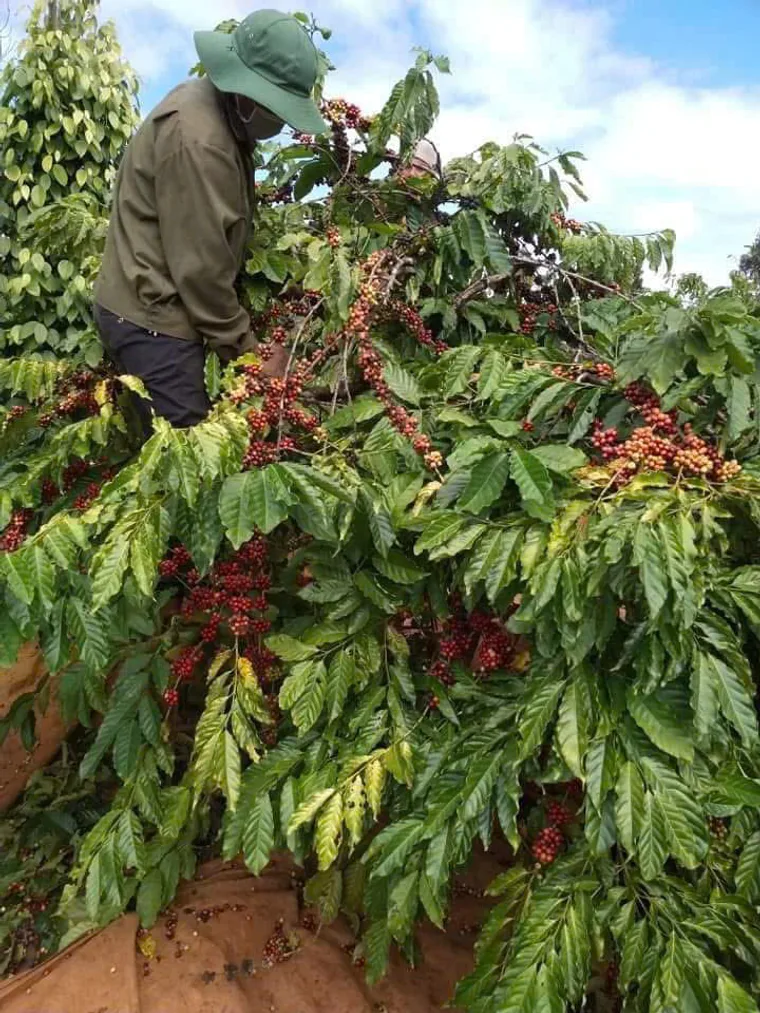
Highland coffee farm in Vietnam where export lots are sourced and graded

Offer comparison

How to compare two quotes without guessing

Check
Stronger supplier
Weaker supplier
Origin clarity
Province, crop year, or blend structure is clearly defined.
“Vietnam origin” with no crop or origin breakdown.
Specification depth
Grade lines, process, tolerances, and methods are written.
Only price, screen, and moisture are shown.
Sample discipline
Pre-shipment and retained sample policy is in place.
Courier sample only; no lot linkage.
Document realism
Supplier distinguishes default docs from conditional ones.
Supplier says “all docs available” without naming them.
Execution readiness
Lead time, packing, and loading controls are operationally clear.
Timelines and controls depend on “when order comes”.

Mini scorecard

Score supplier capability, not just coffee samples

A supplier can send a good courier sample and still fail on operational discipline. This scorecard is intended for commercial, QA, and sourcing teams to use together.

Dimension
Weak
Strong
Exact grade literacy
Headline grade only
Explains screen, black/broken, moisture, process, and test method without prompting
Process disclosure
Uses “cleaned”, “CS”, and “washed” loosely
Discloses each process step and what it changes in the final lot
Sample discipline
Sample is treated as marketing only
Has pre-shipment sample, retained sample, and governing-sample rules
Document control
Lists documents generically
Can separate core export docs from destination-specific or program-specific records
Market readiness
Assumes every market accepts the same pack
Knows the difference between standard coffee, organic, EU-bound, and private-label requirements
Claims handling
No written workflow
States timeline, evidence, resolution path, and replacement responsibility

FAQ

Buyer questions

How should buyers compare green coffee suppliers in Vietnam?

Compare the supplier as an execution system, not only as a source of beans. Buyers should score exact grade literacy, process disclosure, sample discipline, document control, market readiness, and claims handling.

What is the most common mistake when buying Vietnamese green coffee?

Accepting a broad headline like “Vietnam Robusta Grade 1” without defining the full grade line, process, sample rules, and shipment controls.

Is a lower price enough to choose one exporter over another?

Not by itself. A lower quote can become expensive if the supplier is weak on lot consistency, documentation, or claim resolution.

What should importers ask before approving a coffee sample?

Ask how the supplier will connect the approved sample to the shipment lot, which sample governs acceptance, and how retained samples are stored and referenced.

Do all Vietnamese coffee suppliers support the same destination markets?

No. Market-specific readiness varies. Buyers should confirm destination-fit documents, testing, and program-specific compliance before contracting.

Build the cluster

Pair this checklist with grade and compliance pages

Buyers should not use this page in isolation. Pair it with Robusta grade comparison, Screen 18 buyer guidance, coffee export documents, and the more specific organic and EUDR guides.

See GreenTech coffee offers