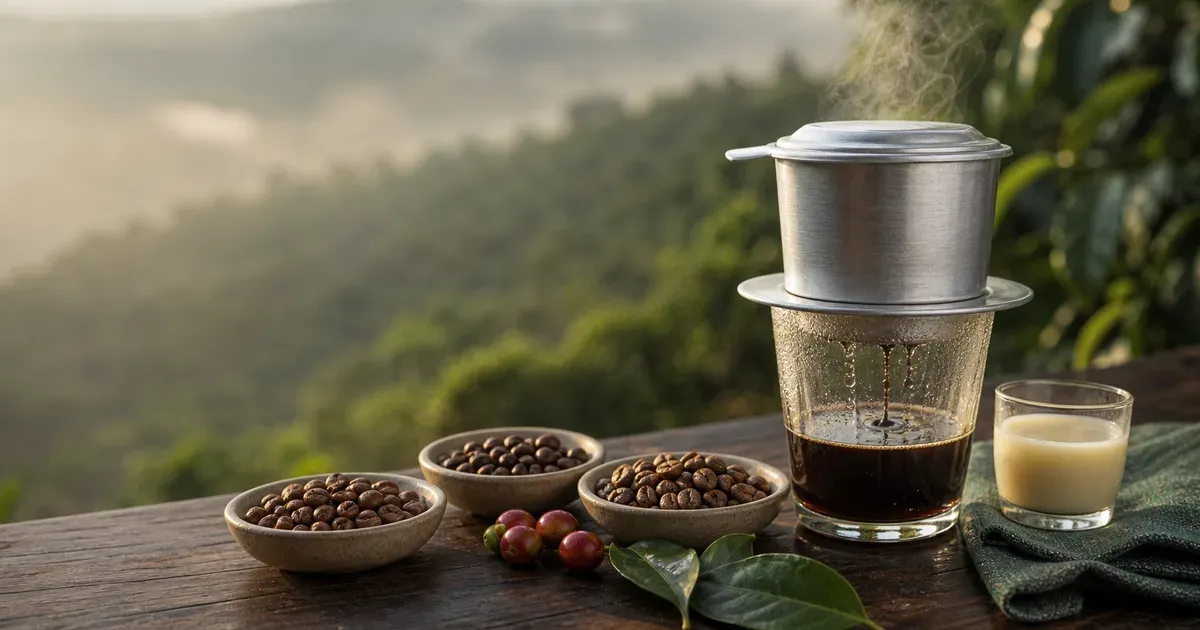
Vietnamese phin filter brewing coffee beside Robusta and Arabica roasted beans

Brewing Guide · Robusta, Arabica & Blends

Vietnamese Phin Coffee Brewing Guide

One repeatable method and four concentrated recipes for medium-roast Robusta, dark-roast Robusta, medium-roast Arabica, and a 70/30 blend.

Quick Answer

How to make Vietnamese phin coffee

Vietnamese phin coffee is small in volume but deliberate in character. The metal filter sits directly over the glass while gravity draws hot water through the coffee, producing a concentrated drink for serving black, over ice, or with condensed milk.

These recipes are concentrated by design. If you prefer a longer black coffee, use the lighter-ratio adjustment later in this guide.

Concentrated starting recipe

About 1:4.8
  1. 1

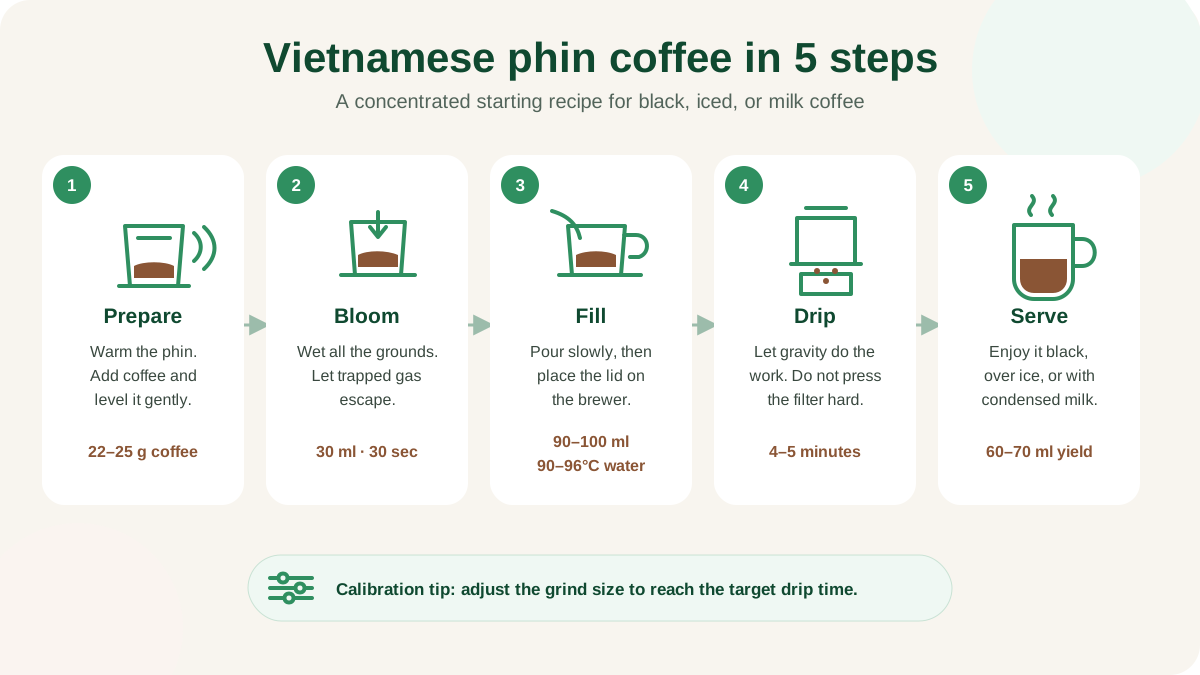
    Preheat the phin and cup

    Rinse the phin and cup with hot water, then discard the rinse. This reduces heat loss and confirms that the brewer sits securely on the cup.

  2. 2

    Add and level the coffee

    Add 22-25 g of ground coffee. Tap lightly to distribute it, then rest the filter insert on top. Do not use the insert like an espresso tamper.

  3. 3

    Bloom for 30 seconds

    Pour approximately 30 ml of water across the bed so all the grounds become wet. Wait 30 seconds before the main pour.

  4. 4

    Fill, cover and drip

    Add the remaining 90-100 ml of water, place the lid on the phin, and allow gravity to complete a 4-5 minute extraction.

  5. 5

    Remove and serve

    Set the phin on its inverted lid or a saucer. Taste the 60-70 ml concentrate before changing the recipe or adding milk and ice.
The Brewer

What is a Vietnamese phin?

A phin is a compact metal drip brewer with a perforated base, brewing chamber, filter insert and lid. It normally uses no paper filter and no pump pressure.

Gravity moves the water through the coffee bed and metal base. The result is a compact, full-bodied cup that may contain more coffee oils and fine sediment than a paper-filter brew.

Phin coffee is closely associated with dark-roasted Robusta and cà phê sữa đá, but medium-roast Robusta, Arabica and Robusta-Arabica blends each create a different balance of aroma, body, acidity and bitterness.

Equipment and calibration

  • A phin large enough for the selected dose
  • A heat-resistant glass, scale, kettle and timer
  • Water between 90°C and 96°C
  • Medium to medium-coarse ground coffee

Use time to calibrate the grind

Grind a little finer if the brew drains too quickly, and coarser if it stalls. For medium-roast Arabica, begin slightly finer than for Robusta. Change one variable at a time.

Four Starting Points

The coffee changes the recipe

Roast level and coffee type affect the useful water temperature, grind and expected cup direction. Treat these as starting recipes and record what happens with the coffee in front of you.

Coffee Dose / water Temperature Grind Cup direction
Medium-roast Robusta 25 g / 120 ml 93-96°C Medium to medium-coarse Cocoa, chocolate and roasted nuts, with a dense body, very low perceived acidity and a mild bittersweet finish.
Dark-roast Robusta 25 g / 120 ml 90-93°C Medium-coarse Dark chocolate, caramelized notes and light smoke, with very full body, minimal perceived acidity and a persistent bittersweet finish.
Medium-roast Arabica 22 g / 130 ml 92-94°C Medium; slightly finer than Robusta Floral, fruit and caramel notes, with smoother medium body, brighter acidity and a cleaner sweet finish.
70% Robusta / 30% Arabica 25 g / 120 ml 92-95°C Medium Chocolate, caramel and roasted nuts with a light floral or fruit accent, medium-full body, low acidity and a balanced finish.
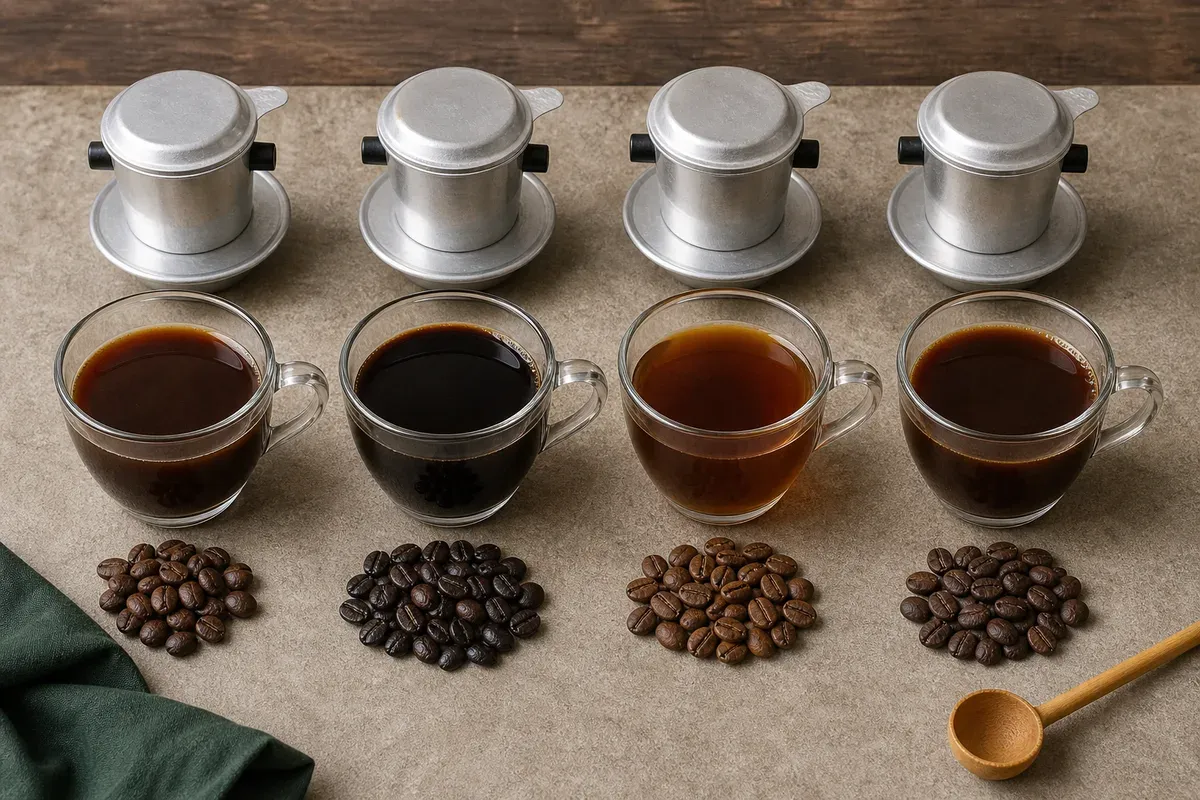
Illustrative comparison of four Vietnamese phin coffees made with Robusta, Arabica and a blend
Illustrative color comparison only. Actual color and clarity depend on the coffee lot, roast, grind, water and phin.
Five steps for brewing Vietnamese phin coffee: prepare, bloom, fill, drip and serve

Recipe Detail

Choose the cup you want to build

Flavor descriptions are expected directions, not guarantees for every lot. Origin, processing, green-bean grade, roast development, freshness, water and extraction all affect the cup.

The all-purpose starting point

Medium-roast Robusta

01
Coffee / water
25 g / 120 ml
Temperature
93-96°C
Grind
Medium to medium-coarse
Bloom
30 ml for 30 seconds
Main pour
90 ml
Time / yield
4-5 minutes / 60-70 ml

Expected profile: Cocoa, chocolate and roasted nuts, with a dense body, very low perceived acidity and a mild bittersweet finish.

Best use: Hot black coffee, iced black coffee, or cà phê sữa đá.

Adjustment: If the cup tastes hollow or sharply bitter, first check whether it drained too quickly and whether the roast itself is very dark.

The bold milk-and-ice profile

Dark-roast Robusta

02
Coffee / water
25 g / 120 ml
Temperature
90-93°C
Grind
Medium-coarse
Bloom
30 ml for 30 seconds
Main pour
90 ml
Time / yield
4-5 minutes / 60-70 ml

Expected profile: Dark chocolate, caramelized notes and light smoke, with very full body, minimal perceived acidity and a persistent bittersweet finish.

Best use: Strong black coffee, iced condensed-milk coffee, or bạc xỉu.

Adjustment: If the result is ashy rather than chocolate-led, lower the water temperature, coarsen the grind slightly, or compare a less-developed roast.

The more aromatic phin

Medium-roast Arabica

03
Coffee / water
22 g / 130 ml
Temperature
92-94°C
Grind
Medium; slightly finer than Robusta
Bloom
30 ml for 30 seconds
Main pour
100 ml
Time / yield
4-5 minutes / About 70 ml

Expected profile: Floral, fruit and caramel notes, with smoother medium body, brighter acidity and a cleaner sweet finish.

Best use: Hot or iced black coffee, a longer drink, or a modest milk addition.

Adjustment: If the cup is sour, thin and short, grind slightly finer before increasing the water temperature.

Body with an aromatic lift

70% Robusta / 30% Arabica

04
Coffee / water
25 g / 120 ml
Temperature
92-95°C
Grind
Medium
Bloom
30 ml for 30 seconds
Main pour
90 ml
Time / yield
4-5 minutes / 60-70 ml

Expected profile: Chocolate, caramel and roasted nuts with a light floral or fruit accent, medium-full body, low acidity and a balanced finish.

Best use: Black phin coffee, iced coffee, milk drinks, or a cafe house blend.

Adjustment: For commercial repeatability, define the origins, processes, green grades and whether the two coffees are roasted separately or together.

Change the Strength

How to make a lighter phin coffee

For a longer black coffee, begin around a 1:8 coffee-to-water ratio rather than forcing more water through an already extracted bed.

15 g / 120 ml18 g / 145 ml20 g / 160 ml

Another option is to brew the concentrate and add clean hot water directly to the cup. This preserves the extraction while letting you choose the final drinking strength.

Milk & Ice

Balance sweetness without hiding the coffee

Robusta: begin with 30-40 g of condensed milk for a 60-70 ml concentrate. Stir until uniform, then add approximately 120-150 g of ice.

Arabica: begin with approximately 20 g of condensed milk. The smaller addition helps preserve more aromatic detail.

These are starting quantities. Condensed-milk brands differ in sweetness and viscosity, while dilution depends on ice size and serving time.

Troubleshooting

Let the cup tell you what to change

Keep dose and water stable while adjusting grind. Changing several variables at once makes a better cup harder to reproduce.

The phin finishes in less than four minutes

Likely causes: The grind may be too coarse, the bed uneven, the dose too small for the brewer, or water may be channeling through the grounds.

What to change: Grind slightly finer and distribute the coffee evenly. Keep the dose and water unchanged so you can evaluate the adjustment.

The phin barely drips

Likely causes: The grind may be too fine, the insert may be pressing too firmly, the chamber may be overfilled, or fines may be blocking the holes.

What to change: Grind coarser, rest the insert gently, confirm the dose suits the chamber, and clean the phin thoroughly.

The coffee tastes sour, sharp or thin

Likely causes: The coffee is probably under-extracted or the selected recipe does not suit the coffee.

What to change: Grind slightly finer, confirm that the water is hot enough, and check whether the brew finished too quickly.

The coffee tastes harsh, dry or excessively bitter

Likely causes: The grind may be too fine, the water too hot, or the roast too developed for the intended cup.

What to change: Try a coarser grind or slightly cooler water. If the cup remains smoky or ashy, evaluate the roast rather than forcing a brewing correction.

The coffee disappears after adding milk or ice

Likely causes: The drink may be over-diluted, or the selected coffee may not have enough body for the serving style.

What to change: Mix coffee and condensed milk before adding ice. Reduce milk or ice before increasing the dose, or use Robusta or a Robusta-forward blend.

Too much sediment reaches the cup

Likely causes: A metal phin allows some fines through, but excessive sediment can indicate an inconsistent grind or damaged perforations.

What to change: Use a more consistent grinder, grind slightly coarser, and inspect the brewer base.

For Cafes & Buyers

Turn a good cup into a repeatable specification

“Vietnamese coffee” is not a complete commercial specification. The same blend ratio can produce very different products when the green coffee, roast, grind and ingredient status change.

Use the phin as a product-development test, then record the fields that the buyer and supplier can evaluate together.

01

Coffee composition

Robusta, Arabica, or the precise blend ratio.

02

Green coffee basis

Origin, process, grade, screen and defect limits where relevant.

03

Roast direction

Medium, dark, or an approved physical reference sample.

04

Ingredient status

Additive-free or a complete declaration of butter, oil, sugar, cacao, flavoring or other additions.

05

Ground format

A phin-oriented grind confirmed against a named brewer and reference recipe.

06

Cup target

Aroma, body, acidity, bitterness, finish and intended milk or ice application.

07

Brewing control

Dose, water input, temperature, target time and expected beverage yield.

08

Approval process

An approved sample and recorded production variables for repeatability.

For more detail on converting roast language into purchase-order fields, read the Vietnamese Coffee Roasting Techniques guide. Buyers comparing green and finished formats can review Vietnamese coffee products and export options.

Common Questions

Vietnamese phin coffee FAQ

01

What is the best coffee-to-water ratio for a Vietnamese phin?

There is no single mandatory ratio. This guide uses approximately 1:4.8 for a concentrated Robusta or blend recipe: 25 g coffee and 120 ml water. For a lighter black coffee, 1:8-1:10 is a practical starting range. Match the ratio to the phin capacity and intended serving style.

02

What grind size should I use for phin coffee?

Begin around medium to medium-coarse for Robusta and slightly finer for medium-roast Arabica. Because grinders and phins differ, use the total drip time as your calibration: finer if the water drains too quickly, coarser if it stalls.

03

Should I press the phin filter insert firmly?

No. Level the coffee and place the insert gently. Hard pressing can restrict flow and make the result harder to reproduce. Control the brew primarily through dose, grind, water and time.

04

What water temperature is best for Vietnamese coffee?

Use approximately 90-96°C. Start around 90-93°C for dark-roast Robusta, 93-96°C for medium-roast Robusta, and 92-94°C for medium-roast Arabica.

05

Why is there less coffee in the cup than the amount of water poured?

Ground coffee retains part of the brewing water. A 120-130 ml input can therefore produce approximately 60-70 ml of concentrated beverage, depending on dose, grind, roast and drainage.

06

Is Robusta or Arabica better for Vietnamese phin coffee?

Neither is universally better. Robusta provides more body, low perceived acidity and a strong base for condensed milk and ice. Arabica can add fragrance, fruit or floral character and a cleaner finish. A 70/30 blend is a useful middle position.

07

Can I use a dark roast in a phin?

Yes. Begin with slightly cooler water and a medium-coarse grind. Dark roast works well when you want a heavy, roast-forward cup, but a persistently ashy result may come from the roast itself rather than the phin method.

08

How much condensed milk should I add?

For the concentrated recipes in this guide, begin with 30-40 g for Robusta and approximately 20 g for Arabica. Stir, taste and adjust according to the coffee and condensed-milk brand.

Develop a Phin Profile

Need coffee for a cafe, distributor or private-label program?

GreenTech works with Vietnam-origin coffee across green, roasted and ground formats. Roasted products are processed through partner facilities, with coffee composition, roast, grind, packaging and sample approval confirmed for the intended program.

01 Target market and sales channel
02 Green, whole-bean, or ground format
03 Preferred Robusta / Arabica ratio
04 Intended black, milk, or iced preparation
05 Clean roast or declared traditional ingredient profile
06 Pack size and private-label requirements
07 Expected order quantity and shipment destination
Request Coffee Samples