Specification guideUpdated July 11, 2026

Vietnam black pepper grades explained

500 g/L, 550 g/L, 570 g/L, and 580 g/L are useful trade shortcuts. They are not complete buying specifications. The importer still has to define defects, moisture, chemistry, safety controls, packaging, and claims language.

Direct answer

Density helps compare physical selection. It does not settle safety or usability.

What it signals

The g/L number can suggest how many light or undeveloped berries remain after selection.

What it misses

It does not prove moisture, piperine, volatile oil, microbiology, residues, treatment, or lot identity.

How buyers use it

A sorting shorthand

In Vietnam export trade, buyers and sellers often begin with density because it is a fast physical reference point.

What current guidance says

500–600 g/L is the normal quality band

CBI’s 11 May 2026 market-entry guide notes that good black pepper generally falls in the 500–600 g/L range, and that lower density indicates more light berries and pinheads.

Why it matters

Quote comparison breaks without it

Density is often the first way buyers normalize offers, but it only becomes useful when the rest of the specification is held constant.

Grade table

What 500, 550, 570 and 580 g/L usually mean in practice

These are commercial patterns, not universal guarantees. The same density can still behave differently depending on cleaning, crop condition, safety controls, and the buyer’s sampling method.

Grade

500 g/L

Commercial base grade

Best fit

Grinding, extraction, seasoning systems, broad food-processing programs

What it tends to signal

A lighter-density lot that may suit industrial use when the rest of the specification is controlled.

What it does not tell you

Whether the lot meets the buyer’s target for light berries, pinheads, microbiology, treatment, or residue limits.

Grade

550 g/L

Mainstream export benchmark

Best fit

Wholesale, spice blending, contract packing, food manufacturing

What it tends to signal

A common reference grade in Vietnam trade and often the point at which buyers start comparison.

What it does not tell you

Whether the pepper is clean enough for the intended channel or whether the lot is ready-to-use without further controls.

Grade

570 g/L

Denser whole-pepper selection

Best fit

Retail grinders, visible whole-pepper programs, premium whole-berry applications

What it tends to signal

Usually a denser physical selection with fewer light and undeveloped berries than lower-density offers.

What it does not tell you

Whether berry size is uniform, aroma is acceptable, or the lot will survive handling with low breakage.

Grade

580 g/L

Premium dense selection

Best fit

Higher-visual whole-pepper programs and applications where dense appearance matters

What it tends to signal

A denser, higher-value trade category that can support premium whole-corn positioning.

What it does not tell you

Whether the lot is the safest, the cleanest, or the best fit for every finished product.

Why density became shorthand

Density is a fast proxy for physical selection, not a replacement for specification.

CBI’s current black pepper market-entry guide points buyers toward several quality frameworks used in trade, including Codex, ASTA, ESA, ISO, and IPC. Across those systems, density sits beside other physical and chemical criteria rather than above them.

That is why 550 g/L often works as a useful starting point in Vietnamese trade, but never as the full contract. Once the product enters a real buying workflow, the importer still has to define how much foreign matter is acceptable, how moisture will be measured, what piperine and volatile oil floor is needed, whether microbiological control sits at origin or destination, and which sample governs the claim.
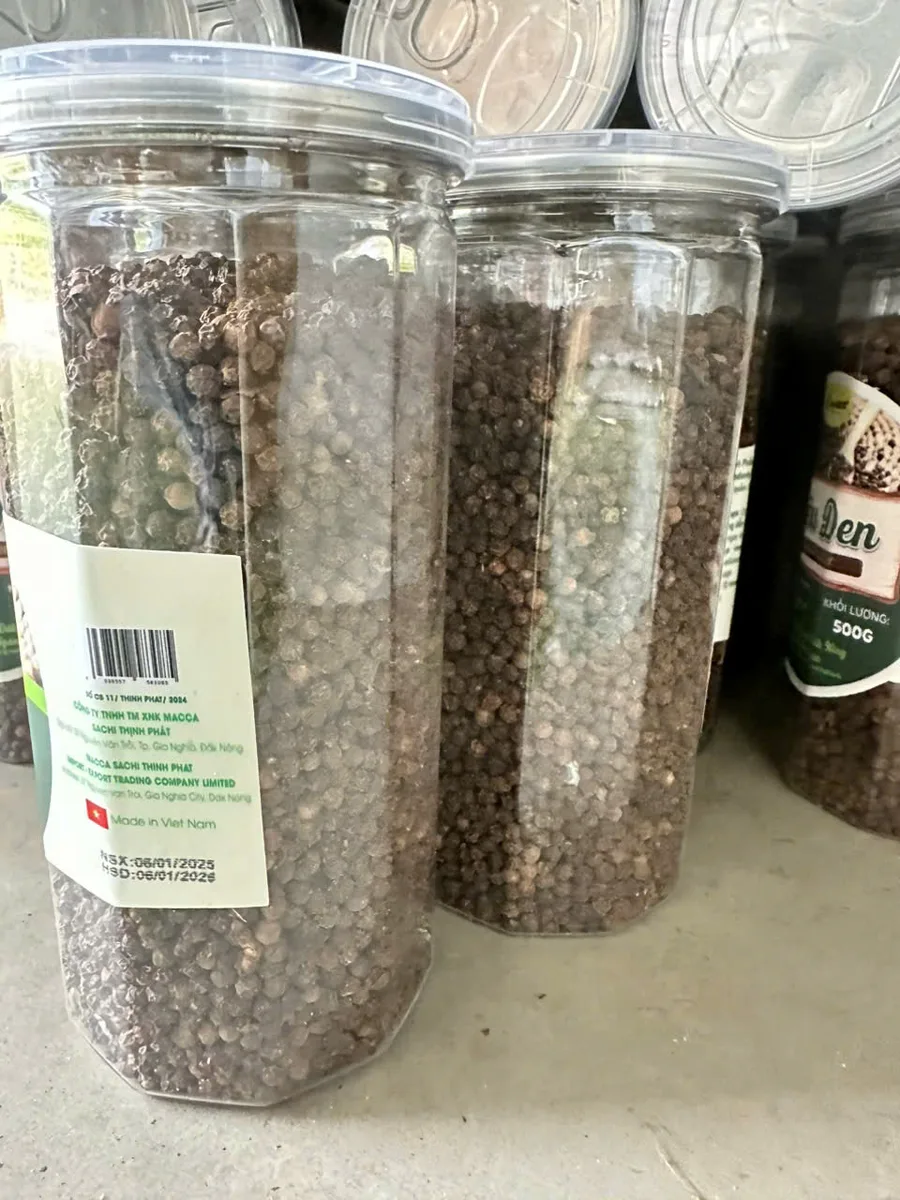
Whole Vietnamese black peppercorns used in export-grade sourcing

Research anchor

Good pepper can fall in the 500–600 g/L band. Lower density usually means more light berries and pinheads.

That does not mean every 580 g/L lot is automatically the best lot for the buyer. It means density should be interpreted inside a wider physical, chemical, and safety specification.


What density misses

Four buyer mistakes that turn a grade into a false sense of certainty

A higher g/L number means cleaner pepper.

Density can indicate fewer light berries, but it does not replace cleanliness, foreign-matter, or defect limits.

550 g/L is a full specification.

It is only one line in the specification. Buyers still need moisture, defect, chemistry, microbiology, treatment, packaging, and claims language.

The denser lot is always better for every product.

The best lot depends on the application. Grinding, extraction, visible whole-pepper retail, and ready-to-eat uses do not optimize for exactly the same attributes.

A dense lot is automatically safer.

Food safety depends on hazard control, verification, handling, and destination-market compliance, not on density alone.

Application fit

Choose the grade by use case, then lock the rest of the controls.

Whole-pepper retail, industrial grinding, extraction, and ready-to-eat applications do not optimize for the same risks. The grade should serve the application, not replace the application brief.

Grinding and extraction

500 or 550 g/L

The buyer is often more sensitive to usable yield, piperine, moisture, safety controls, and price discipline than to the visual look of each whole berry.

Mainstream spice manufacturing

550 g/L

This grade is often the practical comparison point for contract manufacturing, repacking, and broad wholesale use.

Retail grinders and visible whole-pepper formats

570 or 580 g/L

Denser whole pepper can support better visual presentation, but the buyer should still define screen distribution, appearance, and breakage tolerance.

Ready-to-eat or high-risk channels

Any grade, but only with a full safety specification

Density does not control Salmonella, residue, or post-treatment handling. Safety and verification requirements come first.

Minimum complete RFQ

The buyer should quote the full spec, not just “550 g/L.”

This is the threshold between a real sourcing brief and a vague request for pepper. If these lines are not aligned, quote comparison becomes misleading.

Minimum complete pepper RFQ: line item and what to define for each
RFQ line What to define
Commercial identity Whole black pepper, Piper nigrum, declared origin, crop or shipment window, and HS 090411.
Density Target bulk density and test tolerance, for example 550 g/L with the test method agreed.
Defects and cleanliness Light berries, pinheads, foreign matter, mouldy berries, insect damage, and other extraneous matter.
Chemistry Piperine, volatile oil, total ash, acid-insoluble ash, and any buyer-specific analytical requirement.
Moisture Target moisture limit and arrival-risk controls, not only the loading result.
Microbiology Who controls the hazard, which limits apply, which method is used, and whether treatment is required.
Residues and contaminants Destination-specific pesticide panel plus mycotoxins, PAHs, heavy metals, or other agreed hazards where relevant.
Packaging and shipment Bag material, liner, net weight, labels, container protection, and retained-sample method.
Claims and verification Inspection method, lot identity, claim window, replacement rules, and which sample governs acceptance.

FAQ

Questions importers ask when density becomes the negotiation language

What does 500 g/L or 550 g/L mean in black pepper?

It refers to bulk density: the mass of pepper occupying one litre under the agreed test method. In trade, it is used as a shorthand for physical selection, but it is not a complete product specification.

Is 580 g/L always better than 550 g/L?

Not automatically. A denser lot may suit visible whole-pepper applications, but a buyer still has to check defect limits, chemistry, safety controls, treatment status, and application fit.

Does a higher density guarantee fewer defects?

No. Higher density often suggests fewer light berries and pinheads, but the contract still needs explicit defect and cleanliness tolerances.

Can buyers compare two pepper quotes by density alone?

No. Buyers should align density, defect limits, moisture, chemistry, microbiology, treatment, packaging, Incoterm, shipment window, and claims language before comparing prices.

What should a buyer request beyond the grade?

At minimum: moisture, foreign matter, light berries, pinheads, piperine, volatile oil, microbiology, treatment status, residue panel, packaging, lot identity, and claims procedure.

Sources reviewed

Current reference base

This guide is built for importer use, so the sources emphasize standards, compliance systems, and buyer-side qualification frameworks rather than generic commodity summaries.

International Pepper Community

Accessed 11 July 2026

Used to confirm that Vietnam market shorthand is commonly displayed as 500 g/L and 550 g/L reference categories.

Next step

Compare the same pepper, at the same point in the chain.

Send GreenTech your target application, density, and treatment responsibility. To build a complete spec, pair this grades guide with the white pepper guide, steam sterilization guide, pepper origins map, and the B2B supplier checklist.